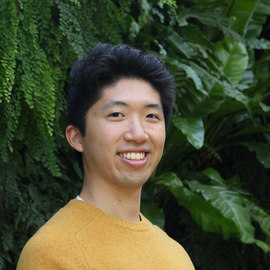
Fengling (Feng) Hu, MD-PhD
MD-PhD student
Penn Statistics in Imaging and Visualization Endeavor (PennSIVE), Perelman School of Medicine
Welcome
Hi, it’s nice to meet you! I’m Feng, an MD-PhD working towards a career as a radiologist-statistician. I completed my PhD in the PennSIVE group at the Perelman School of Medicine with Dr. Russell (Taki) Shinohara. I am currently completing a one-year preliminary Internal Medicine residency at Lankenau Medical Center and will be starting as a research-track Diagnostic Radiology resident at the University of Pennsylvania in 2027.
My research interests include developing novel statistical and machine learning methodology for neuroimaging and other big data settings. In neuroimaging, I’ve developed tools for multi-modal image analysis, unsupervised MRI segmentation problems, statistically-robust deep learning image harmonization, and missing-data-aware image segmentation. I also authored a comprehensive review of current statistical and deep learning image harmonization methods. Statistically, I proposed a privacy-preserving algorithm for distributed fitting of population-based reference charts.
As I continue to grow as a radiologist and biostatistician, I’m particularly interested in leveraging powerful and flexible methods, such as deep learning, in statistically-informed ways and building new methods alongside the scientists who will use them. As I learn more about the intricacies of diagnostic radiology, I hope that my methods will not only provide accurate predictions, but also allow for valid inference and new insights for patient-centered care.
Outside of my methodological work, I’m interested in collaborating with biomedical researchers and clinicians to enable them to get the most out of their data in a statistically-sound way, as well as how to interpret studies and clinical trials from a statistical lens. To do so, I’ve served as a statistical collaborator for a number of biomedical, clinical, and health informatics projects.
In this vein, as a graduate student, I founded the Biostatistical Student Analysis Core (BSAC) within the Biostatistics graduate program. BSAC serves to create real-life consulting experience for fellow Biostatistics students and provide an accessible statistical service to fellow biomedical trainees. If you’re a Penn biomedical trainee of any kind and are interested in working with a biostatistician, please reach out through the BSAC Intake Application! We’d love to hear from you!
View my CV here or at the “My CV” tab above!
- Neuroimaging
- Deep learning
- Normative modeling
- Federated/distributed learning
- Clinical trials
- Observational studies
- scRNA-seq
- Spatial statistics
-
Diagnostic Radiology Resident, 2027-2031
Univerisity of Pennsylvania
-
Internal Medicine Preliminary Resident, 2026-2027
Lankenau Medical Center
-
MD-PhD student, 2019—2026
University of Pennsylvania
-
PhD in Biostatistics, 2021—2024
University of Pennsylvania
-
BA in Statistics and Biology, 2015—2019
Amherst College
-
High school, 2012—2015
Illinois Mathematics and Science Academy (IMSA)
Skills
Research Experience
- Learn, apply, and extend theoretical statistics concepts in the biomedical setting.
- Develop and validate statistically-motivated methodology for computational neuroscience.
- Collaborate with neuroimaging scientists on applied segmentation and analysis problems.
- Work with Graduate Group leadership to build, organize, and run BSAC within PhD program time and funding constraints.
- Lead outreach for new collaborations and connect collaborators to consultants with appropriate skillset.
- Advocate for fellow BSAC consultants to get appropriate credit and conduct consultations that are limited in scope.
- Provide statistical guidance and conduct analyses for basic science, clinical, and health informatics collaborators.
- Draft methodological descriptions and create figures for publication.
- Investigate essential metal characteristics in weedy rice species to determine the metal uptake mechanisms.
- Establish Arabidopsis thaliana lines with mutations in essential iron-deficiency response proteins.
- Provide statistical guidance for experimental design and analysis of complex data.
- Create publication-quality figures and draft manuscript.
- Perform mixed-methods, thematic analysis on a program designed to improve postpartum return to care.
- Investigate themes in text-message-based communication correlated with return for postpartum care.
- Tutor students in Introduction to Statistics, Intermediate Statistics, and Probability in lecture materials, homework, and R code.
- Review class handouts and create solution sets R worksheets.
- Serve as a statistical analyst for various on-campus academic and administrative departments and projects.
- Write and edit manuscript draft describing impact of NPLD on labor and delivery outcomes in China
- Collect and analyze longitudinal data on changes in labor and delivery outcomes across multiple Chinese hospitals.
- Mediate conversation between American obstetricians, obstetrical anesthesiologists, neonatologists, and nurses and their Chinese counterparts in the delivery rooms of target hospitals for one week each summer. The goals were to facilitate use of labor analgesia, decrease Cesarean rates, and provide better neonatal care.
- Provide instruction and guidance to a team of mostly American high school, college, and medical school students who are semi-fluent to fluent in Chinese.
- Maintain and distribute an updating list of commonly encountered medical terminology and their translations.
All Publications
Contact
- fengling.hu@pennmedicine.upenn.edu
- 423 Guardian Drive, Philadelphia, PA 19104
- GitHub